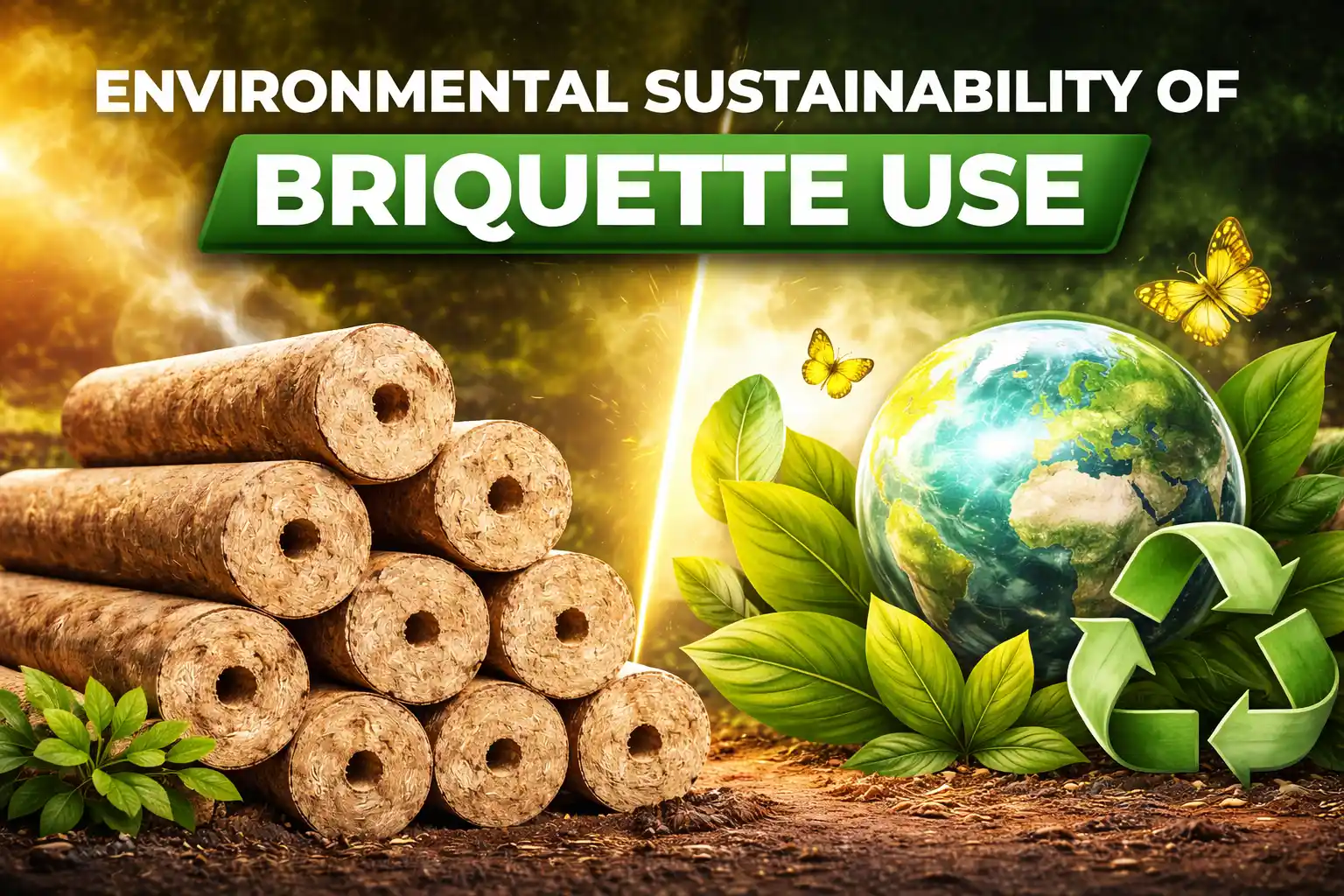
Understanding the environmental sustainability of briquette use is important for businesses, households, and industries aiming to reduce their carbon footprint and adopt cleaner energy sources. For a more detailed discussion of ecological benefits and fuel efficiency, you can read the main article, Environmental Impact of Using Briquettes as Fuel, which explains the role of briquettes in sustainable energy. Additional insights on eco-friendly practices, energy trends, and resources are also available on the homepage of jdgurukul.com, offering helpful guidance for companies and individuals focused on sustainable solutions.
Briquettes are compact fuel blocks made from agricultural residues, sawdust, and other organic waste. They serve as an eco-friendly alternative to traditional fuels like firewood, coal, or fossil fuels. By utilizing waste materials, briquettes contribute to waste reduction and help conserve forests, making them a sustainable energy choice.
Reduced Deforestation
One of the major environmental benefits of briquette use is the reduction of deforestation. Traditional firewood collection often leads to forest degradation and habitat loss. Briquettes, created from agricultural by-products, reduce the demand for cutting trees while providing a reliable fuel source for cooking and heating.
Lower Carbon Emissions
Briquettes produce lower carbon dioxide and harmful gas emissions compared to coal or kerosene. They burn more efficiently and evenly, reducing the release of pollutants such as carbon monoxide, sulfur, and particulate matter. This contributes to cleaner air and less environmental damage, especially in densely populated areas.
Recycling Agricultural Waste
Using biomass briquettes promotes recycling of agricultural residues such as coconut shells, sawdust, rice husks, and sugarcane bagasse. Instead of burning these materials openly, which causes smoke and pollution, briquettes turn waste into valuable fuel. This reduces greenhouse gas emissions and supports circular economy principles.
Energy Efficiency
Briquettes provide a high calorific value relative to their weight, which allows users to generate more heat with less fuel. This efficiency reduces overall fuel consumption, saving resources and lowering the environmental footprint of energy use in households, restaurants, and small industries.
Sustainable Production Practices
Many briquette manufacturers follow sustainable production processes. They use minimal chemicals, avoid harmful binders, and optimize energy use during production. Sustainable practices ensure that the environmental benefits of briquette use extend from production to consumption.
Versatility and Community Benefits
Briquettes are used for cooking, heating, and small-scale industrial processes, offering an alternative to non-renewable fuels. Their adoption promotes eco-conscious behavior among communities, reduces reliance on fossil fuels, and supports local economies by creating green jobs in briquette production and distribution.
Supporting Global Environmental Goals
The widespread adoption of briquettes aligns with international efforts to combat climate change, reduce air pollution, and promote renewable energy. Using biomass briquettes contributes to cleaner energy systems and supports environmental sustainability at both local and global levels.
Conclusion
The environmental sustainability of briquette use is evident through reduced deforestation, lower emissions, efficient energy output, and recycling of agricultural waste. By replacing traditional fuels with briquettes, households, businesses, and industries can reduce their ecological footprint, contribute to cleaner air, and promote renewable energy practices. Embracing briquettes as a sustainable fuel option supports long-term environmental conservation and strengthens community resilience.
